
Hurricane Roof Damage Claims — Licensed Contractor & Adjuster Serving Southwest Florida
A hurricane insurance claim is not the same as a standard roofing insurance claim, and homeowners who treat them the same way routinely leave money on the table — or worse, accept settlements that don't cover what full restoration actually costs. The rules are different, the deductibles are different, the documentation requirements are different, and the insurance company's posture is different when a named storm has affected thousands of properties simultaneously and every carrier in Florida is managing a surge of claims at once. Getting it right requires expertise in both roofing and insurance — and that combination is exactly what we bring to every hurricane claim we support.
At Roofer LLC, our owner David Samadnejad holds both Florida roofing contractor license CCC1330693 and a Florida insurance adjuster license. We've been repairing hurricane-damaged roofs across Southwest Florida since 2012, working through Hurricane Charley, Wilma, Irma, and Ian, and the full range of named storms that have affected our region over two decades. We understand hurricane claims from the inside — what needs to be documented, how damage needs to be characterized, where insurers look to reduce settlements, and what it takes to support a claim through to an accurate resolution.
Understanding Your Named Storm Deductible
This is the single most important thing Southwest Florida homeowners need to understand about hurricane claims, and the one most often misunderstood. Florida homeowner's insurance policies carry two separate deductibles: a standard deductible for most covered losses, and a separate named storm deductible that applies specifically when damage is caused by a hurricane or tropical storm designated by the National Hurricane Center. The named storm deductible is not a flat dollar amount — it is a percentage of your home's insured value, typically between 2% and 5%. On a home insured for $400,000, a 2% named storm deductible means you are responsible for the first $8,000 of any hurricane claim. At 5%, that number is $20,000.
This matters enormously for how you approach a hurricane claim. It affects whether filing a claim makes financial sense for partial damage, how you evaluate repair vs. replacement decisions, and how the insurance company's settlement offer should be assessed against your actual out-of-pocket obligation. We factor named storm deductible implications into every hurricane claim assessment we support — and we make sure homeowners understand their specific deductible structure before they make any decisions about how to proceed.
Wind vs. Flood — The Most Critical Distinction in Any Hurricane Claim
Standard homeowner's insurance policies cover wind damage. They do not cover flood damage — rising water, storm surge, and inundation — which requires a separate flood insurance policy through the National Flood Insurance Program or a private flood carrier. In a major hurricane like Ian, where catastrophic storm surge coincided with extreme wind in the same event, the cause of damage at any specific property is the most contested and consequential question in the entire claims process. Insurers have strong financial incentive to characterize damage as flood-related rather than wind-related, because flood claims go to the flood insurer while wind claims come from the homeowner's carrier. For properties that experienced both wind damage and surge, getting the damage cause correctly documented — and correctly attributed — is the difference between a covered wind claim and an uncovered loss. Our dual expertise in roofing assessment and insurance adjuster practice means we document hurricane damage with the specificity and precision that this distinction requires.
Hurricane Ian Claims — Fort Myers, Lee County & Southwest Florida
Hurricane Ian made landfall near Cayo Costa as a Category 4 hurricane on September 28, 2022, and tracked northeast directly over Lee County, producing the most destructive wind and surge event in Southwest Florida's recorded history. The claims process that followed has been, for many homeowners, nearly as difficult as the storm itself. Initial settlements were rushed and often incomplete. Out-of-state contractors produced substandard repairs that are now failing. Carriers have disputed damage attributions, challenged replacement decisions, and applied aggressive depreciation to reduce payouts. Many Ian-era claims were settled for less than the true cost of complete restoration — and for some of those homeowners, the ability to supplement or reopen the claim may not yet have expired.
If you have unresolved Ian damage, a current inspection that documents existing conditions alongside the original storm damage scope is the starting point for understanding your options. We assess what was paid, what was repaired, and what wasn't — and we advise honestly on what paths remain available.
Hurricane Irma Claims & Prior Storm History
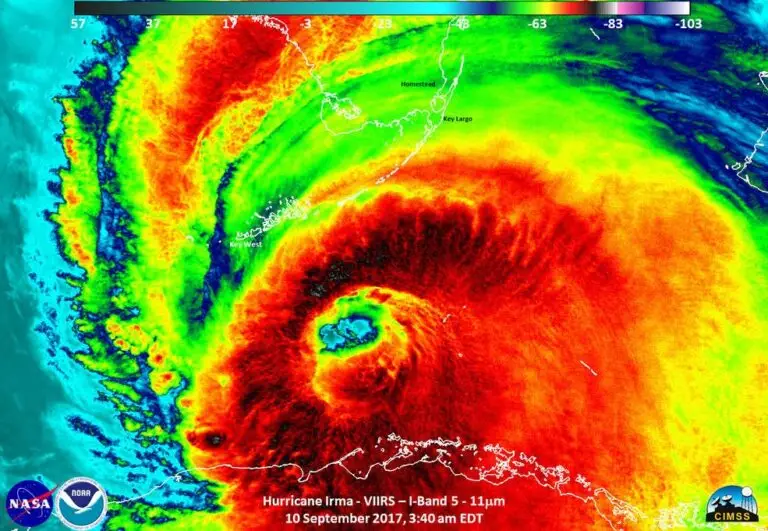
Hurricane Irma made landfall on Florida's southwest coast near Marco Island in September 2017 as a Category 3 storm, producing significant wind damage across Collier County, Naples, and the surrounding communities before tracking north through the state. Irma claims were filed and settled years ago — but Irma-era damage that was incompletely repaired, or that was repaired in ways that have since failed, is a legitimate roofing condition issue today. If a current roof problem traces back to work that was done after Irma, the quality and completeness of that prior work is relevant to understanding how the current condition should be addressed.
Why You Need Independent Representation — The Hurricane Sandy Warning
The most important lesson from major hurricane claim disasters isn't about the storms themselves — it's about what happens when homeowners go through the claims process without independent professional representation. After Hurricane Sandy devastated New Jersey and New York in 2012, a large-scale fraud scandal emerged that should be required reading for every homeowner in a hurricane-prone state. Engineering firms hired by insurance carriers to assess storm damage were found to have systematically altered their reports — changing findings from wind damage (covered by homeowner's policies) to foundation and structural issues (not covered) at the direction of the insurance companies paying them. Engineers went to jail. Carriers paid hundreds of millions in settlements. Congressional hearings were held. And thousands of homeowners who had trusted the process discovered that the experts sent to assess their damage were working against them from the start.
This wasn't an anomaly. It was a systemic pattern that emerged precisely because homeowners had no independent professional in their corner — no one who understood both the technical damage assessment and the insurance claim process well enough to recognize when an engineer's report had been manipulated or a damage characterization had been deliberately skewed.
The same dynamic is present in every major hurricane claim environment, including Southwest Florida after Ian. Insurance companies retain engineers, adjusters, and consultants whose continued business relationship with the carrier depends on producing results the carrier finds favorable. That is not a conspiracy — it is simply how financial incentives work. The homeowner who goes through a major hurricane claim without independent professional representation is relying on the good faith of people whose employer has every reason to minimize the settlement.
When you have a licensed roofing contractor who also holds an insurance adjuster license representing your interests from the first inspection, that dynamic changes. We know what the insurer's adjuster is looking for. We know how damage reports are structured and where they can be challenged. We know the difference between an accurate engineering assessment and one that has been shaped to serve the carrier's interests. And we produce independent documentation that establishes the true scope of damage on the record — documentation that cannot simply be overwritten by a carrier-hired engineer's contrary conclusion. For Southwest Florida homeowners navigating hurricane claims, that independent professional presence is not a luxury. After Sandy, it should be considered essential.
What We Do — Full Hurricane Claim Support:
Initial Damage Inspection & Documentation
Before any contact with your insurance carrier, we conduct a complete inspection of all storm-related damage and produce a full photographic and written documentation package. We document every affected component — roofing surfaces, flashings, gutters, soffits, fascia, any structural elements reached by the storm — and characterize the cause and scope of damage to the standard insurance adjusters use. This documentation is the foundation of your claim, and doing it right at the start is the most important step in the entire process.
Claim Filing Support
We assist with the initial claim filing, ensuring that the damage scope is correctly represented from the first notice of loss. The framing of a claim at initial filing affects how the insurer approaches the adjustment, and we make sure your claim is filed in a way that accurately reflects the full extent of what the storm did.
Insurer Adjuster Review
When the insurance company sends their own adjuster, we are present and prepared to walk through our documentation, answer technical questions, and challenge any initial scope determinations that underrepresent the damage. Our adjuster licensing means we engage with the carrier's adjuster as a professional peer — not as a contractor asking for approval.
Supplement Filing
Insurer initial scopes frequently miss items, apply incorrect pricing, or fail to account for code-required upgrades that a restoration must include. We identify every item that warrants supplementation and file a complete, documented supplement that reflects the true cost of restoring your roof to proper condition.
Dispute & Appraisal Support
When an insurer disputes a claim scope or settlement value, Florida's insurance policy appraisal process provides a mechanism for resolution outside of litigation. We support homeowners through the appraisal process, providing the technical documentation and expert assessment that the process requires.
Full Restoration
Once the claim is properly settled, we complete the roofing restoration to the scope the damage warranted — with the same craftsmanship standards we apply to every roof we install.
Select your city for local hurricane claim information:
Hurricane Claim in Naples, FL
Hurricane Claim in Bonita Springs, FL
Hurricane Claim in Estero, FL
Hurricane Claim in Marco Island, FL
Hurricane Claim in Lehigh Acres, FL
Hurricane Claim in Fort Myers, FL
Call Roofer LLC at (239) 398-2316 to schedule a hurricane damage inspection and claim assessment anywhere in Southwest Florida. The earlier you get professional representation involved in a hurricane claim, the better your outcome. We respond quickly, document thoroughly, and fight for what your claim is actually worth.