
Hurricane Roof Damage Claims Marco Island FL — Licensed Contractor & Adjuster
Roofer LLC provides hurricane claim support across Marco Island — serving the island's beachfront estates, bayfront properties, canal-front homes, and high-rise residences from the Gulf-facing communities along South Collier Boulevard to the bay and waterway properties of Tigertail, Hideaway Beach, and the Smokehouse Bay corridor. Our owner David Samadnejad holds both Florida roofing contractor license CCC1330693 and a Florida insurance adjuster license. For Marco Island homeowners facing a hurricane claim, that dual expertise means having someone in your corner who is professionally obligated to represent your interests — not the carrier's — and who brings equal command of the technical damage assessment and the insurance process to every claim we support.
No community in Southwest Florida faces a more direct hurricane threat than Marco Island. The island sits fully exposed to the Gulf of Mexico with no barrier islands providing protection to the west, and it is surrounded by water on all sides — a geography that means every significant storm tracking through the Gulf presents Marco Island with the full combination of sustained winds, gusts, surge, and salt-air-laden debris that produces the most complex and most contested hurricane claims in the region. The homeowners who navigate those claims successfully are the ones who had professional independent representation from the start.
Hurricane Irma — Marco Island's Direct Hit
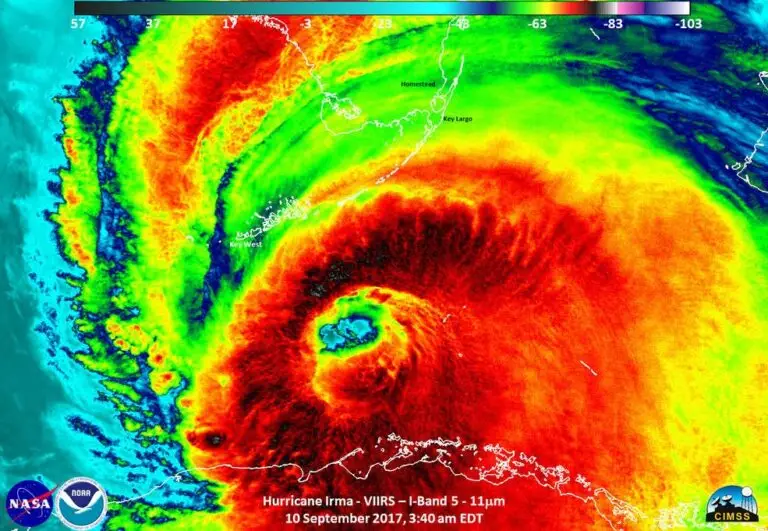
Hurricane Irma made landfall on Florida's southwest coast near Marco Island on September 10, 2017 as a Category 3 hurricane. For the purposes of Marco Island's hurricane claim history, Irma is not a nearby event or a regional storm — it is the storm that made landfall here, producing the full force of landfall-level wind, surge, and rain directly on the island's homes, roofs, and structures. The damage Irma generated across Marco Island was extensive and in many cases complex: wind damage to tile and metal roof systems that had also experienced surge inundation, beach-facing properties that took the direct force of both the wind field and the Gulf surge, and canal-front homes where the distinction between wind damage and rising-water damage became the defining question of the claim.
Irma claims were filed and settled in 2017 and 2018 — but not all of them were settled correctly. The scale of Irma's statewide impact meant that carriers were processing an enormous volume of simultaneous claims under pressure to close them quickly. Some Marco Island homeowners accepted initial settlements that didn't reflect the full scope of what Irma damaged. Others had repairs completed that addressed the visible surface damage without restoring the underlayment, flashings, or structural components that a landfall-level storm had compromised. Subsequent storms and years of weather have revealed gaps in some of those repairs — and current roof problems that trace back to Irma-era work are a legitimate issue that a professional current inspection is the right starting point for understanding.
Wind vs. Flood — The Most Contested Issue on Marco Island
Of all the communities Roofer LLC serves in Southwest Florida, Marco Island is where the wind vs. flood distinction in hurricane claims carries the greatest financial consequence and faces the most aggressive carrier challenge. Standard homeowner's policies cover wind damage. Flood coverage is a separate policy — through NFIP or a private flood carrier — and it does not overlap with the homeowner's policy. On an island that experiences storm surge with nearly every significant Gulf hurricane, the carrier's financial incentive to characterize roof and structure damage as flood-caused rather than wind-caused is at its highest. For beach-facing properties, bayfront homes, and canal-front residences on Marco Island, the cause-of-loss determination is the central issue in any hurricane claim — and without independent professional documentation that establishes wind damage from the first inspection, homeowners have no effective basis to challenge a carrier determination that moves their covered wind damage into the uncovered flood category.
We document hurricane damage on Marco Island with the precision this distinction requires: establishing the wind damage cause, sequencing, and scope from the initial inspection, building an independent record that accurately reflects what the wind produced versus what rising water produced — and that holds up under carrier scrutiny.
Named Storm Deductibles on High-Value Marco Island Properties
Marco Island's property values are among the highest in Southwest Florida, and that makes the named storm deductible one of the most significant financial factors in any hurricane claim here. A 2% named storm deductible on a Marco Island home insured for $1,000,000 means $20,000 out of pocket before coverage begins. At 5%, that obligation is $50,000. For waterfront and beach-facing properties where insured values routinely exceed those figures, the deductible math demands serious attention before any claim decisions are made. We review the specific named storm deductible structure as part of every initial hurricane claim assessment we conduct on Marco Island.
The Independent Representation Imperative
Marco Island is exactly the environment where the lessons of Hurricane Sandy's engineering fraud scandal are most directly applicable. After Sandy struck New Jersey in 2012, engineering firms hired by insurance carriers were found to have systematically altered their damage assessments — changing wind damage findings to non-covered structural and foundation issues at the direction of the carriers paying them. Engineers were prosecuted and imprisoned. Carriers paid hundreds of millions in settlements. The homeowners who were harmed had no independent professional in their corner who understood both the damage assessment and the claims process well enough to catch what was happening. On Marco Island — where property values are high, where claim amounts are correspondingly significant, and where the wind-vs.-flood attribution fight gives carriers multiple avenues for minimizing settlement — the financial incentive to deploy carrier-favorable expert assessments is at its most acute. Independent professional representation is not optional in this environment. It is what keeps the process honest.
Salt Air Corrosion & Post-Storm Urgency
Marco Island's marine environment is the most aggressive in Southwest Florida's roofing market. Salt air corrosion affects every metal component on the island — flashings, fasteners, drip edge, gutters, and any exposed metal roofing — and any storm breach that exposes these components to direct salt air contact accelerates deterioration rapidly. On Marco Island, temporary repair after a hurricane is not merely a precaution — it is an urgent necessity, because the window between a storm breach and significant corrosion-driven secondary damage is shorter here than anywhere else in the region. We provide emergency tarping and temporary repairs as the first step in every post-hurricane assessment on the island.
Full Hurricane Claim Support for Marco Island Homeowners
We provide complete hurricane claim support from initial inspection through final settlement and full restoration: damage documentation to the insurance adjuster standard, claim filing support, presence during the insurer's adjuster visit, wind-vs.-flood cause documentation, supplement filing for incomplete scopes, and appraisal process support through any dispute. Once the claim is correctly resolved, we complete the full restoration — with the material quality and installation standards that Marco Island's aggressive marine environment demands.
Call Roofer LLC at (239) 398-2316 for hurricane claim support anywhere on Marco Island. We serve Marco Island zip code 34145.