A homeowner in the Riverstone community in Naples called us about a water stain spreading across their hallway ceiling. The roof is tile, and the leak traced back to one spot: the flashing wall, where the sloped roof meets a vertical wall of the house. Here is what we found, why it was leaking, and how we fixed it the right way.
What We Found: Two Original Builder Mistakes
Once we pulled the tile back at the wall, the cause was clear. Two problems from the original construction were working together to send water straight into the home:
- No sealant on the flashing. The builder never sealed the wall flashing, so wind-driven rain could get behind it.
- Underlayment installed the wrong way. The underlayment was lapped so that water running down the roof could slip under it instead of shedding over it. Rather than protecting the deck, it funneled water right into the house.
Over time, that water rotted the roof sheathing at the wall and showed up inside as the stain on the hallway ceiling.
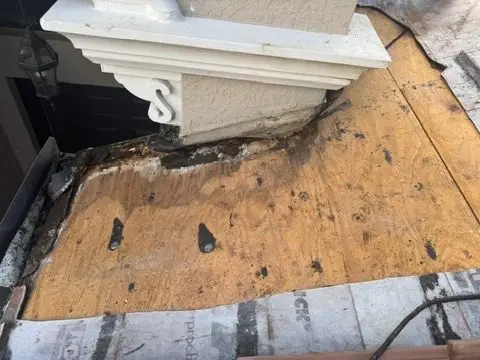
Step 1: Cut Out the Rotted Sheathing and Install New Plywood
Wet, rotted wood can’t hold fasteners or support new waterproofing, so patching over it wasn’t an option. We cut out the damaged sheathing and replaced it with new plywood to give the repair a solid, dry base.
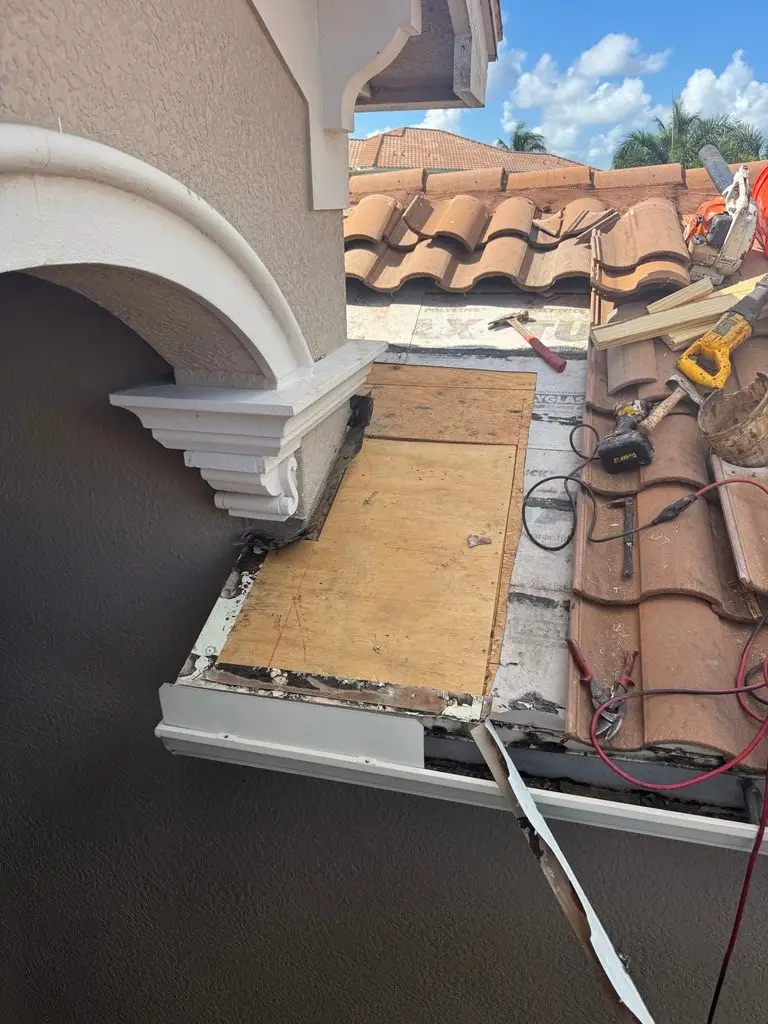
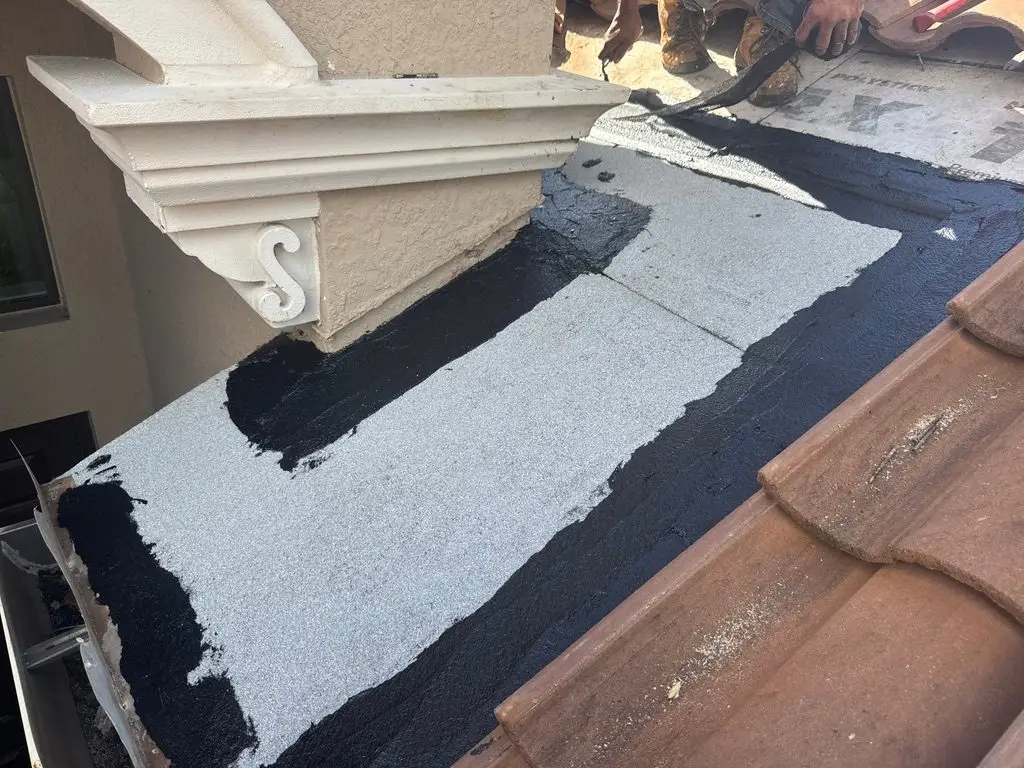
Step 2: Seal It In with Modified Cap Sheet
Next we sealed the new plywood in with modified cap sheet, running it into the flashing wall and lapping it correctly so water sheds down the roof and over the membrane, not underneath it. That corrected the exact flaw that caused the leak in the first place.
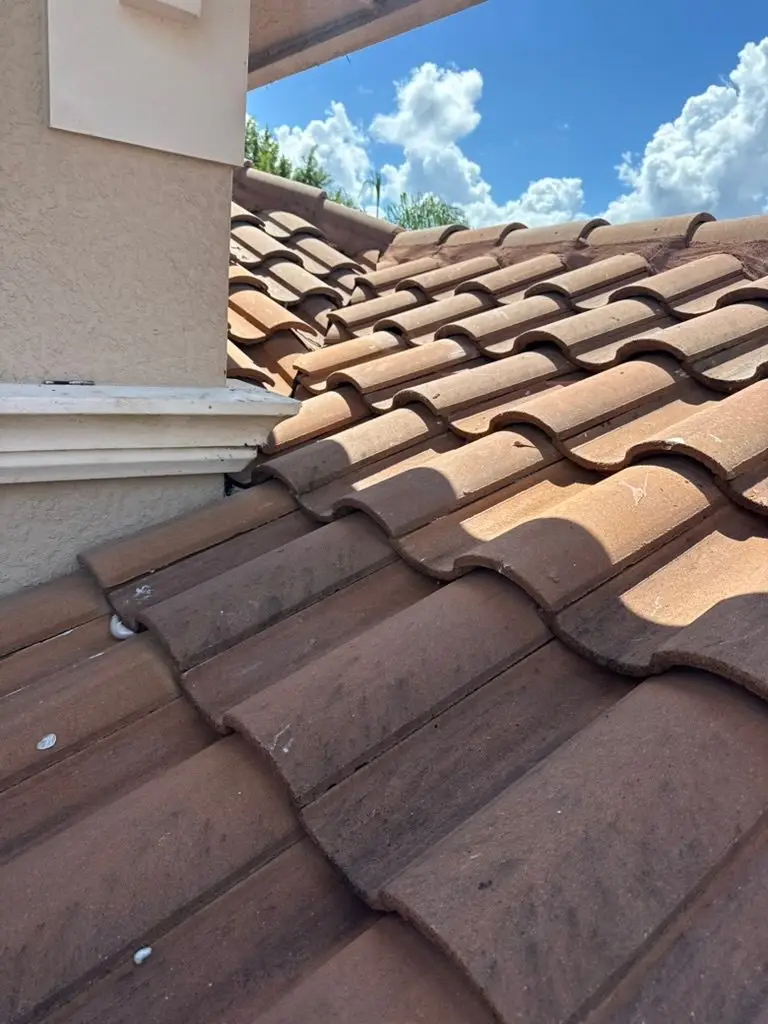
Step 3: Reinstall the Tile with Foam Adhesive (No Screws)
When it came time to put the tile back, we set it with foam adhesive instead of screws. Every screw driven through underlayment is a new hole in the waterproofing. Using foam adhesive meant we weren’t penetrating the brand-new underlayment we had just installed, so the repair stays watertight.
Why Flashing Walls Are a Common Leak Point on Naples Tile Roofs
Many homes in Naples have tile roofs that tie into stucco walls, second stories, and parapets. Every one of those transitions depends on flashing and properly lapped underlayment. Tile itself sheds most water, but the underlayment beneath it is what actually keeps your home dry. If the flashing isn’t sealed or the underlayment is lapped backwards, our heavy summer rains will find the gap, often years after the house was built.
Warning signs to watch for:
- Ceiling stains near an exterior wall or below where a roof meets a second story
- Stains that grow after heavy or wind-driven rain
- Cracked, slipped, or missing tiles along a wall
Catching it early keeps a localized repair like this one from turning into a bigger decking and drywall job. Learn more about our Naples roof leak repair and tile roofing services.
Seeing a Ceiling Stain in Your Naples Home?
Roofer LLC finds the actual source of the leak and fixes it right, not just the symptom. Call us at (239) 398-2316 or request an inspection online.